Poverty and Medicine
The connection between poverty and ill health is well established in poor nations, where poverty increases the risk of illness and injury, which in turn limits the individual’s ability to earn an income whilst simultaneously increasing the need to pay for medical care. Across the globe many millions live with crushing debt caused by medical costs, often relating to preventable conditions, and very often relating to medical error.
Prevalent in the vaccine injury testimonies at Canada’s Allison Inquiry in Ottawa from 8-11 September 2026, was the experience of impoverishment caused by loss of income combined with unaffordable health care costs. As medical doctors working with the vaccine injured, we can confirm a similar trend amongst New Zealand’s vaccine injured.
Crowdfunding for Medical Costs
Defined as the practice of raising money from a large number of people, typically via the internet, crowdfunding has become an essential feature in the lives of those experiencing unaffordable health care costs. Today’s social media is teeming with video footage of young people seeking financial support to afford treatment for life threatening conditions such as cancer and motor neuron disease. All use crowdfunding platforms as a collection point for those wishing to contribute to their cause.
Crowdfunding platforms are private companies providing a central point for donors to send funds. The platform typically takes a percentage of donations before forwarding the rest to the allocated bank account of the recipient. There are at least 75 such platforms in operation.
Two of the best known crowdfunding platforms used in New Zealand are GiveALittle and GoFundMe.
Headquartered in Auckland with eight staff, GiveALittle was founded in 2008 and acquired by Perpetual Guardian in 2020. With assets worth $4 billion, Perpetual Guardian describe themselves as New Zealand’s premier provider of estate planning services.
GiveALittle take a service fee of 5% of all donations, which is reduced to an average 2% cost to recipients due to most donors adding the service fee to the amount of their donation. Since 2008 they have taken a total of $361.2 million in donations, suggesting total company earnings of over $18 million.
Also founded in 2008, GoFundMe was rebranded in 2010 and became the world’s largest crowdfunding platform in 2017. The company takes 2.9% + 0.30c per donation. More than $50 million is raised each week, suggesting total company earnings of more than $1.45 million per week.
Impersonating Crowdfunders
It is no secret that crowdfunding is big business. Whilst serving a useful purpose, these platforms are yet another beneficiary in the pandemic business model that oversees harm and impoverishment for profit.
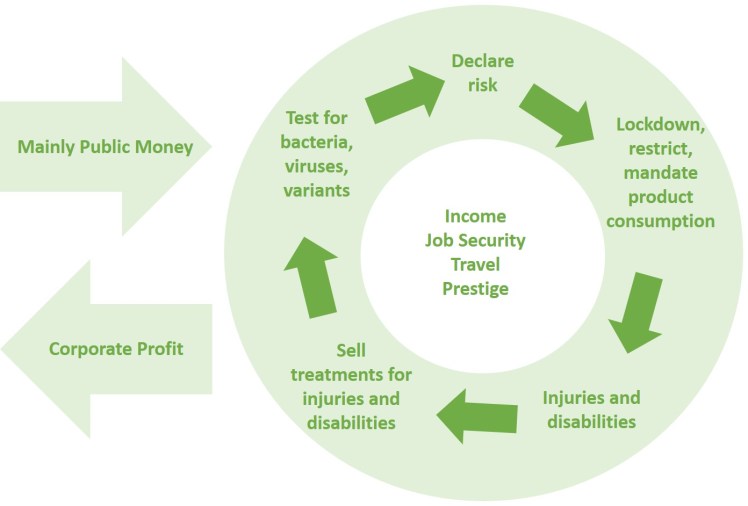
It should come as no surprise to anyone who understands the corruption of the pandemic industry, that an explosion in crowdfund platform impersonators is being seen on social media. The scam is very simple, and very easy to detect.
Imposters create a webpage that looks similar to any other crowdfunding platform, with a logo, an endearing or official-sounding name, and all of the appropriate buttons (Home, About Us, Contact Us, FAQ and Donate). They add the stolen photographs, video footage and edited profile of genuine fundraisers.
The page appears entirely genuine and often tens of thousands of dollars have been raised by unsuspecting donors. The only button that works on these fraudulent sites is the “DONATE” button. All other buttons lead to nothing.
We suggest that this is an inevitable evolution in a culture that is steeped in fraud and crime. The vaccine injured have been silenced, denied and attacked for over five years now. It is only natural that the next step would be to divert funds from their cause, abusing the empathy of decent people, in order to acquire ill-gotten gains.
Please be careful where you channel any financial contributions during our burgeoning health crisis. Explore any webpage posing as a crowdfunder. Do all of the buttons work? For example is there a Home Page? Is there an About Us page? Are there FAQs to read? Can you find what percentage of your donation will go to the platform vs how much will be sent to the actual cause? Is there a way to contact the website owners? Or is the only working website feature a Donate button likely leading to the private bank account of someone committing fraud?
There are ways to donate directly to the vaccine injured, bypassing all crowdfunding sources by making contact through those who support them such as our own NZDHHC Clinic.

